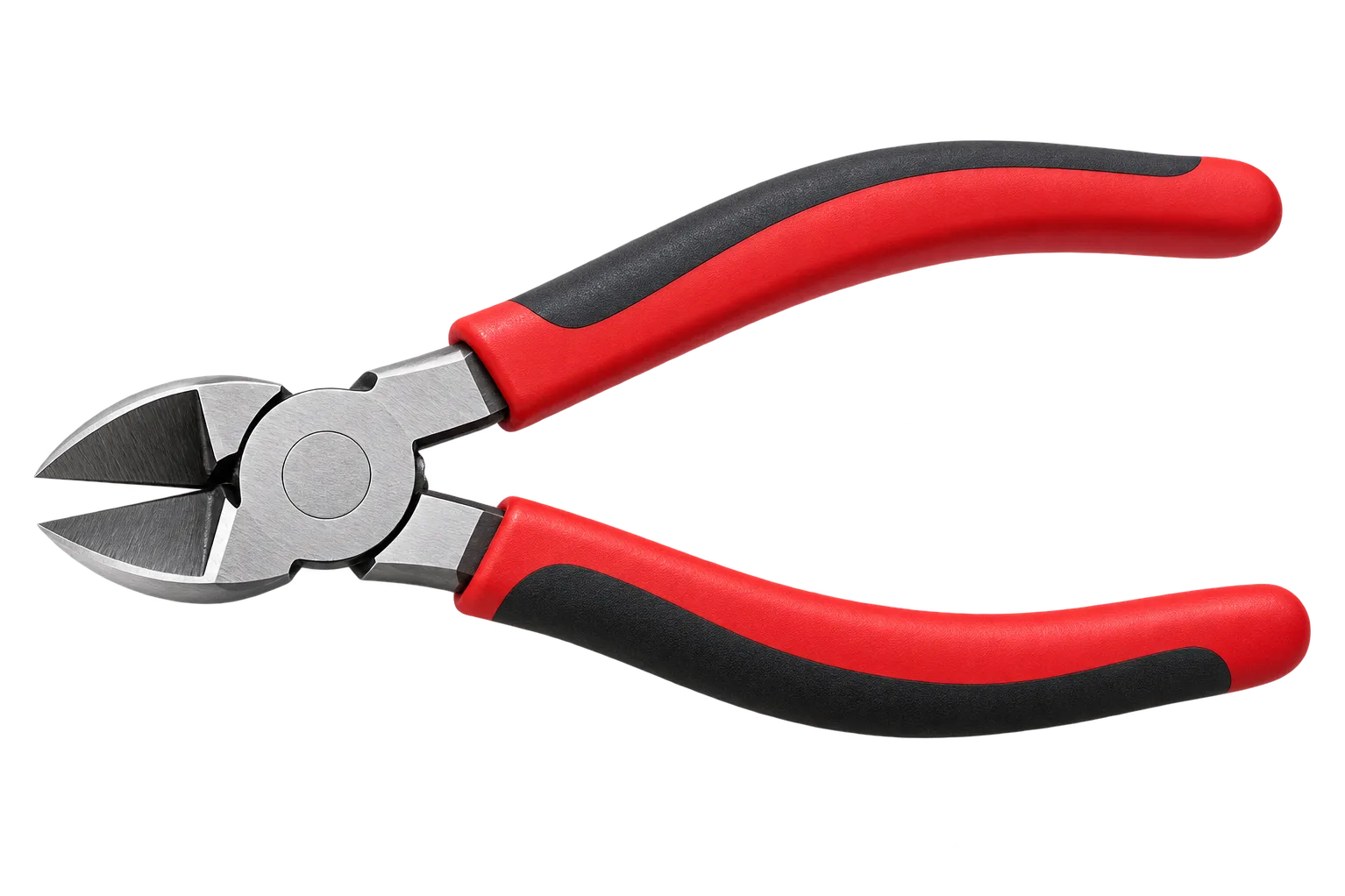
Cutting and nipping tools may appear straightforward, yet tool geometry, material quality, cutting capacity, and application fit can significantly influence day-to-day production work. When evaluating Vessels Nipper and Cutter options for industrial use, procurement teams should focus on the actual task rather than purchasing only by general tool category.
A tool intended for repeated production work needs to be evaluated differently from one used occasionally for maintenance.
Start With the Material Being Cut
The first question should be what material the operator needs to cut.
Different cutters may be intended for wires, leads, plastics, electronic components, cable-related work, or other production materials. Using a cutting tool outside its intended capacity can damage the cutting edges and produce inconsistent results.
Procurement teams should identify:
- Material type
- Material thickness
- Required cut profile
- Frequency of use
- Access space
- Required finish
- Operator handling requirements
These details make product selection considerably more accurate.
Consider Production Frequency
A tool used a few times per week faces different wear conditions from one used repeatedly throughout a shift.
For continuous industrial work, edge durability and operator comfort become increasingly important. Handle design, grip, spring action, tool weight, and cutting effort can affect productivity when the same movement is repeated hundreds of times.
This makes ergonomics a practical production consideration rather than simply a comfort feature.
Avoid Selecting Only by Appearance
Two nippers may look almost identical but be designed for different materials and cutting conditions.
Selecting a tool based solely on physical appearance can lead to damaged edges, poor cutting quality, or shortened service life.
Before purchasing Vessels Nipper and Cutter tools, buyers should verify model specifications and application suitability. Where an existing tool has performed successfully, retaining the model information can simplify replacement procurement.
Look at the Cost Per Useful Service Period
The lowest purchase price does not always represent the lowest operating cost.
If a production tool loses cutting quality quickly and requires frequent replacement, procurement frequency and operator disruption can increase. Conversely, buying a higher-specification tool for a very light-duty task may provide little practical benefit.
The useful comparison is therefore between purchase cost, application suitability, expected usage frequency, and replacement cycle.
Industrial Procurement in Bengaluru
Bengaluru has a diverse manufacturing base covering electronics, electrical equipment, machinery, automotive components, aerospace-related production, fabrication, and automation. Tool requirements can vary significantly between these industries.
OLE Automation Inc supports manufacturing and industrial engineering requirements in the region. For procurement teams evaluating production tools, communicating the exact material, dimensions, expected usage, and working conditions makes it easier to identify an appropriate model.
A well-selected cutter should fit the job being performed repeatedly on the factory floor. Matching cutting capacity, edge design, ergonomics, and operating frequency can improve consistency while reducing avoidable tool replacements and production interruptions.
Keywords