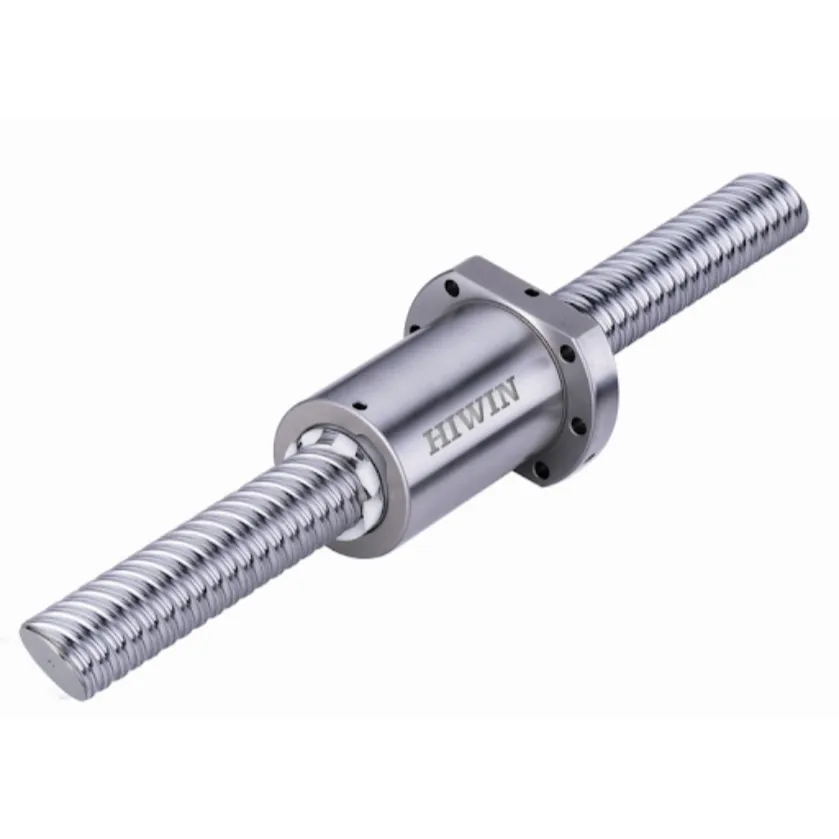
A ballscrew may receive most of the attention in a linear positioning system, but the way the screw is supported can significantly affect rigidity, alignment, speed capability, and positioning performance. Selecting suitable Ballscrew Support Units is therefore an important part of machine design.
Support units are used to locate and support the screw shaft while allowing controlled rotation.
Fixed and Supported Ends Serve Different Functions
A typical ballscrew arrangement may include a fixed-side support and a supporting-side unit.
The fixed side generally manages axial positioning and provides the rigidity needed to control screw movement. The opposite end supports rotation while accommodating the mechanical requirements of the assembly.
Choosing an arrangement depends on screw length, operating speed, load, accuracy, and machine configuration.
What Engineers Should Evaluate
Before selecting a support unit, review the following factors:
- Ballscrew shaft diameter
- End machining dimensions
- Axial load
- Rotational speed
- Required rigidity
- Bearing arrangement
- Mounting orientation
- Lubrication requirements
- Installation space
- Alignment accuracy
Matching only the shaft diameter can overlook critical performance considerations.
Signs of an Unsuitable Support Arrangement
Problems in linear motion are sometimes blamed on the ballscrew when the support arrangement is contributing to the issue.
Symptoms can include abnormal noise, vibration, inconsistent positioning, excessive axial movement, premature bearing wear, temperature rise, and unstable operation at higher rotational speeds.
Misalignment between the screw, support unit, and guide system can create additional loads that reduce component life.
Support Unit Selection and Machine Speed
Long ballscrews operating at higher speeds require careful engineering because rotational behaviour becomes increasingly important.
The screw diameter, unsupported length, support configuration, and operating speed influence critical-speed considerations. Increasing motor speed without evaluating the mechanical system can therefore create instability.
Machine builders should establish the intended travel speed first and then assess whether the screw and its support arrangement can operate within suitable limits.
For Bengaluru OEMs building CNC equipment, assembly machinery, automation systems, and material-handling solutions, this evaluation can prevent expensive redesign after machine commissioning.
Evaluating the Complete Linear Axis
OLE Automation Inc supplies industrial automation and power transmission solutions for manufacturing and machine-building applications in Bengaluru. When evaluating Ballscrew Support Units, the provider should be able to understand the surrounding mechanical configuration rather than treating the support bearing as an independent item.
A useful selection discussion includes the ballscrew specification, shaft-end drawing, expected load, rotational speed, mounting method, accuracy requirement, and application environment.
The goal is not simply to find a support unit that physically fits. It is to create a mechanically compatible arrangement that maintains the intended ballscrew alignment and supports the required machine performance.
This system-level approach becomes particularly important in precision equipment where small amounts of axial movement or misalignment can influence the final positioning result.
Keywords