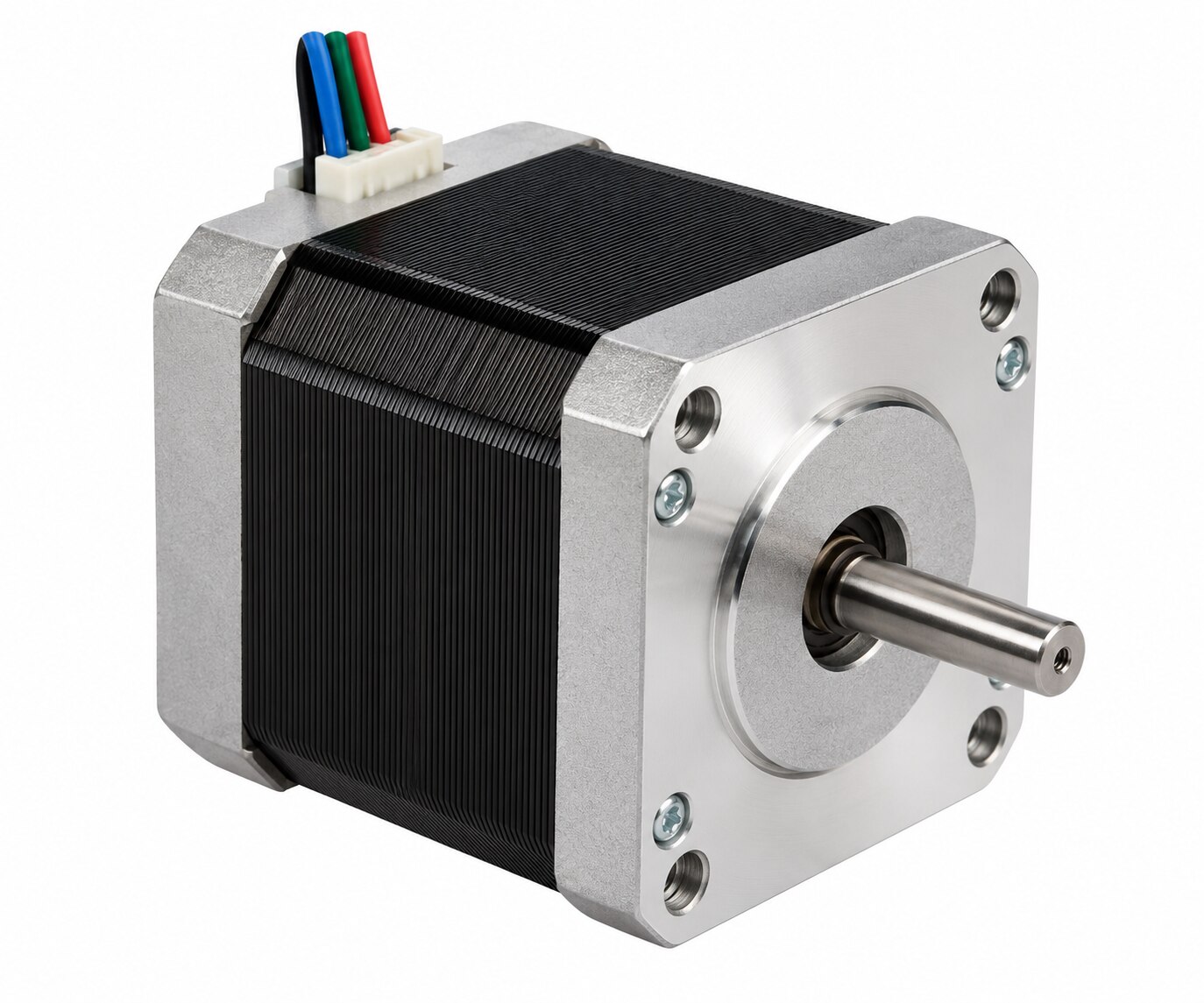
A stepper motor is a strong fit when you need predictable incremental motion, moderate speed, and straightforward command-based control without encoder feedback. By the end, you will be able to compare it with other actuator types, calculate the forces and speeds your mechanism requires, and identify the conditions that make open-loop stepping unsafe or uneconomical.
Key takeaways
- Size from running torque and acceleration, not holding torque alone.
- Compare the required motion profile with the motor’s torque-speed curve.
- Use a servo when missed steps or rapid dynamic changes are unacceptable.
- Protect vertical loads with a brake or separate mechanical safety device.
Start with the motion profile, not the motor’s holding-torque number
A stepper motor provides enough control when the motion profile stays within its torque-speed capability and the application can accept open-loop positioning. Compare the required running torque during acceleration and travel with the motor’s pull-out torque-speed curve; do not size from holding torque alone.
Holding torque describes the motor at zero speed, while usable torque falls as speed rises.
A practical stepper motor choice usually has these conditions:
- The load follows a predictable force and inertia pattern.
- Motion is intermittent or continuous at low-to-moderate speed.
- Command-based positioning matters more than maximum dynamic performance.
- The system can tolerate losing position after an overload, unless you add an encoder and recovery logic.
- The motor can dissipate heat during dwell, because it continues drawing winding current while holding position.
Open-loop positioning fails silently when acceleration is excessive, the drive cannot supply commanded current, resonance disrupts synchronism, or the load exceeds running torque. The controller keeps counting pulses even after the rotor falls behind. A closed-loop stepper can detect and correct some errors, but feedback cannot overcome an inadequate torque-speed curve or excessive heat.
For rapid acceleration, high speed, large load changes, or tight following-error control, a servo is the safer choice. At higher speeds, drive supply voltage also matters: a chopper drive with sufficient voltage builds winding current faster against inductance; the winding’s nameplate voltage alone does not select the supply.
How pulses become motion—and where positioning accuracy is lost
Each command pulse advances the motor according to its phase sequence: the drive energises the windings in a defined order, pulling the rotor through discrete rotor steps. A 1.8-degree step angle gives 200 full steps per revolution, so pulse frequency sets rotational speed: 200 pulses per second produces one revolution per second.
Use this procedure to estimate actual movement:
1. Calculate full-step travel from the step angle and transmission ratio. With a 5 mm lead screw, one 1.8-degree step moves 5 ÷ 200 = 0.025 mm before transmission losses.
2. Add microstepping only as a command increment. At 1/16 microstepping, the same motor accepts 3,200 pulses per revolution, producing smoother, quieter low-speed motion. That 0.00156 mm commanded increment is not guaranteed mechanical positioning accuracy; friction, detent torque, current mismatch, magnetic nonlinearity, compliance, and load torque prevent perfect settling.
3. Check pulse frequency at the required speed. The 3,200-pulse-per-revolution example needs 16,000 pulses per second at 300 rpm, so the controller and drive must sustain that rate without missed pulses.
4. Audit the mechanism, not just the motor. Lead-screw pitch error, backlash, coupling flex, bearing play, frame deflection, and thermal expansion can exceed the step angle’s contribution. A homing sensor improves reference repeatability but cannot remove backlash during travel.
5. Treat open-loop position as an assumption. Excess acceleration, resonance, overload, or inadequate current can make the rotor lose synchronism while the controller continues counting pulses, destroying resolution, accuracy, and repeatability.
Choose between a stepper, servo, DC motor, and pneumatic actuator
Choose a stepper when speed is low to moderate, torque demand is predictable, and command-based positioning matters more than maximum acceleration. It suits intermittent indexing and continuous motion within its torque-speed curve. Holding torque at zero speed does not prove it will accelerate the load without stalling.
| Option | Strengths | Best match |
|---|---|---|
| Stepper motor | Simple pulse control, high holding torque, low cost; open-loop operation reduces feedback hardware | Predictable loads, low-to-moderate speed, indexing, moderate duty cycle |
| Servo motor | Encoder feedback, high speed, rapid acceleration, strong following-error control | Variable loads, tight accuracy, high power, fast or sustained duty cycles |
| Brushed DC motor | Smooth rotation, broad speed range, simple drive; positioning needs an encoder and controller | Cost-sensitive speed control, fans, conveyors, and moderate positioning demands |
| Pneumatic actuator | High force-to-size ratio, fast strokes, rugged operation | Repetitive end-to-end motion where compressed air and limited positioning are acceptable |
The stepper versus servo decision is mainly a feedback trade-offs decision. Add an encoder to a closed-loop stepper when you need error detection or limited correction, but do not expect it to become a high-speed servo; its torque, heat, acceleration, and voltage limits remain.
Select a servo when load inertia changes sharply, acceleration is aggressive, or missed position creates scrap or a hazard. Select a pneumatic actuator when you need two-position motion rather than controlled intermediate positioning.
A stepper also loses its advantage when high duty cycle keeps the motor near its thermal limit or when the load repeatedly exceeds its acceleration torque.
Size the motor from force, speed, inertia, and heat
Calculate the load before choosing a frame size. For linear motion, use F = ma + friction + external load and v = distance ÷ time. A screw needs T = F × lead ÷ (2πη), with screw lead in metres per revolution and efficiency η; motor speed is 60v ÷ lead.
| Mechanism | Motor requirement | Speed relationship |
|---|---|---|
| Screw | T = F lead ÷ (2πη) | Motor rpm = 60v ÷ lead |
| Belt and pulley | T = Fr ÷ η | Motor speed = v ÷ r |
| Rack and pinion | T = Fr ÷ η | Motor speed = v ÷ r |
| Rotary table | T = Jα + load torque | Motor speed follows the ratio |
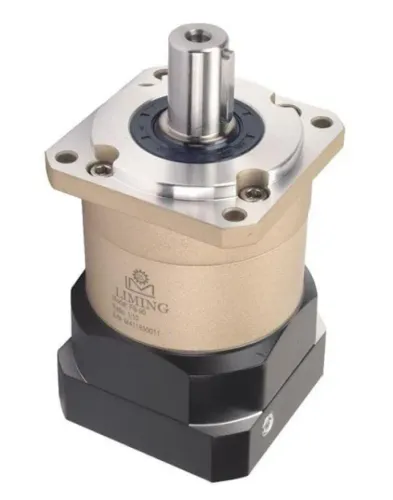
For belts, racks, and pulleys, r is the driven pitch radius. With a pulley ratio N defined as motor revolutions per load revolution, reflect load inertia to the motor as Jload ÷ N².
Add reflected inertia to rotor inertia, then calculate acceleration torque; a motor that moves the load steadily can still stall during a fast index.
Check the selected motor against its torque-speed curve, not its zero-speed holding torque. Also verify the drive’s phase-current limit, connection method, and thermal rating. Bipolar series and parallel wiring require different current and inductance settings, while a higher regulated supply voltage improves high-speed torque.
- Confirm commanded pulse rate: a 200-step motor at 1/16 microstepping needs 3,200 pulses per revolution.
- Use acceleration ramps to limit resonance and peak torque demand.
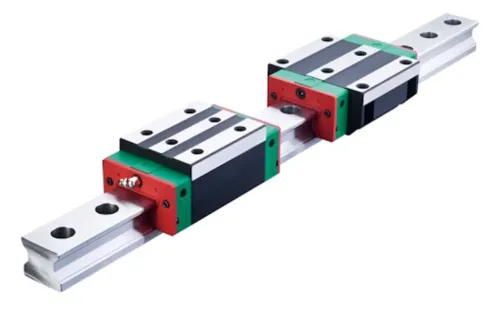
- Include guide preload and seal drag in F; when sizing a stage using components supplied by OLE Automation Inc, do not substitute a rail’s load rating for its running resistance.
Check resonance, vertical-load safety, and the limits of open-loop control
A stepper becomes unsafe or inaccurate when commanded motion exceeds its available dynamic torque: the rotor loses synchronism, while the controller keeps counting pulses. Check the torque-speed curve, not just the zero-speed holding-torque figure.
Pull-in torque determines whether the motor can start at a commanded speed without a ramp. Pull-out torque is the maximum load torque it can sustain without losing step. Keep acceleration torque and steady load torque below that limit, then use acceleration ramping to avoid sudden demand.
Resonance, commonly encountered in a motor’s mid-speed range, can amplify vibration and trigger missed steps; change speed, add damping, or retune the drive.
For a vertical or back-drivable axis, powered holding torque is not a safety device. Power loss removes it. Use an independent brake, counterbalance, self-locking transmission, or retention mechanism where a falling load could injure people or damage equipment.
Open-loop control is suitable only when the load is predictable and a position error can be detected safely during the next inspection or cycle.
| Open-loop stepper | Counts commanded pulses without verifying position | Predictable loads, moderate speed, noncritical recovery |
|---|---|---|
| Closed-loop stepper | Uses an encoder to detect or correct some errors | Disturbance-prone motion that still fits the motor’s torque and speed limits |
| Servo | Continuously controls position, speed, and torque through feedback | High acceleration, changing loads, tight following error, or sustained high power |
Choose feedback when missed motion is unacceptable. Choose a servo when feedback cannot compensate for the required speed, acceleration, or torque.
Frequently asked questions
What should you use to size a stepper motor?
Use the motion profile, required force, speed, acceleration, reflected inertia, duty cycle, and heat limits. Check running torque against the motor’s pull-out torque-speed curve rather than sizing from holding torque alone.
How does a stepper motor convert pulses into motion?
A driver energises the motor phases in sequence. Each input pulse advances the rotor by a defined step angle, while microstepping divides that electrical sequence into smaller commanded increments.
When is a servo motor a better choice than a stepper motor?
Choose a servo when the application needs feedback, high acceleration, changing loads, high speed, or protection against undetected lost steps. A stepper suits controlled profiles that remain within its torque-speed capability and accept open-loop positioning.
What safety issue applies to stepper motors on vertical loads?
A stepper does not automatically hold a vertical load safely after power loss or a missed step. Add a motor brake, counterbalance, lead-screw self-locking arrangement, or independent mechanical support.