Industrial machinery increasingly depends on controlled movement, compact mechanical design, and repeatable positioning. In applications where a rotating component must handle loads from several directions without sacrificing accuracy, Cross Roller Bearings can provide an effective engineering solution.
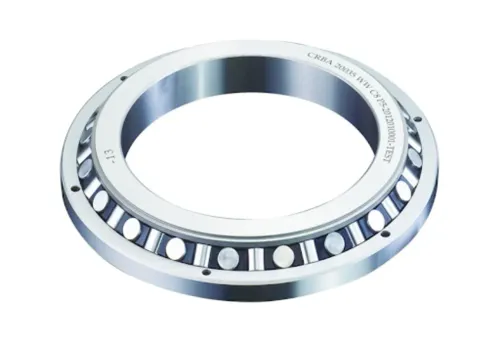
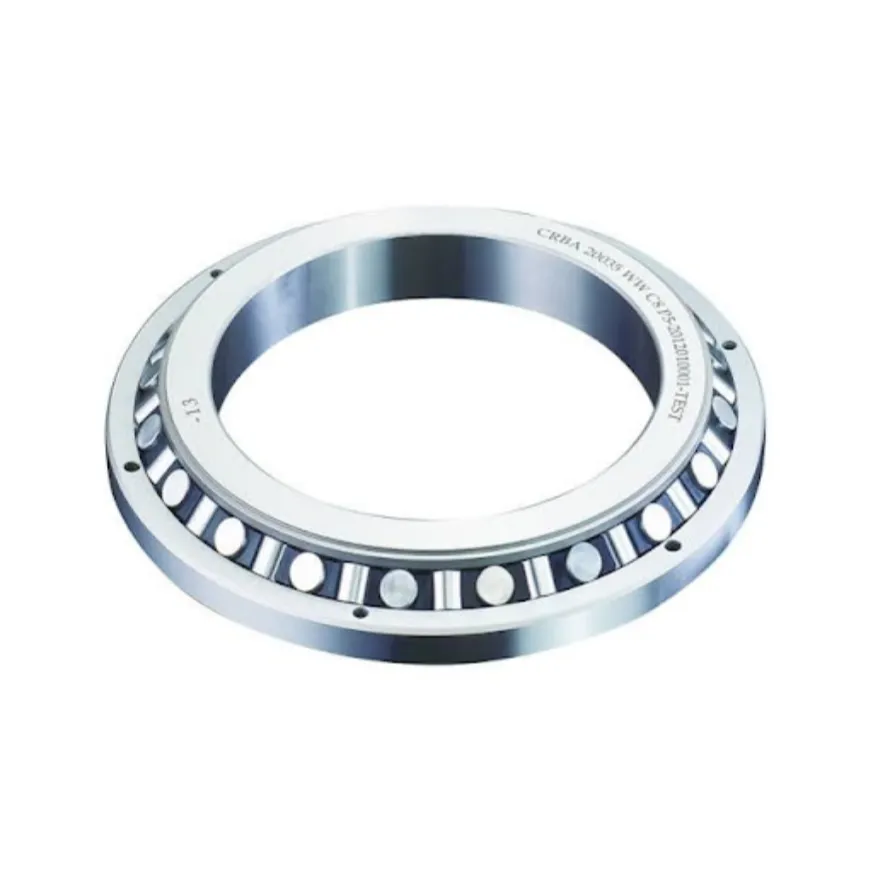
Unlike conventional bearing arrangements that may require multiple bearings to manage different load directions, cross roller designs use cylindrical rollers arranged alternately at right angles. This configuration allows a single bearing assembly to support radial loads, axial loads, and moment loads.
For machine builders and automation engineers, this can simplify mechanical design while maintaining rigidity.
Why the Roller Arrangement Matters
The internal roller configuration is what gives these bearings their distinctive performance characteristics. Because adjacent rollers are positioned perpendicular to each other, forces can be distributed in multiple directions.
This arrangement can provide several practical advantages:
- High rotational rigidity
- Compact bearing dimensions
- Controlled shaft movement
- Reduced deformation under combined loads
- Accurate positioning in precision mechanisms
- Support for demanding motion applications
These characteristics make the bearing useful where equipment space is limited but mechanical stability remains important.
Common Industrial Applications
Cross roller designs are frequently considered for applications where precise rotation and structural stiffness are required. Examples include rotary tables, robotic joints, indexing mechanisms, inspection equipment, machine tools, semiconductor machinery, and specialized automation systems.
In factory automation, bearing selection should never be based on dimensions alone. Engineers also need to evaluate the direction and magnitude of loads, operating speed, expected accuracy, lubrication requirements, mounting arrangement, and environmental conditions.
For manufacturers in Bengaluru and across Karnataka, these considerations become particularly relevant when designing automated production machinery that operates continuously.
Cross Roller Bearings and Machine Accuracy
Mechanical accuracy depends on more than motors and controllers. Bearings, guides, couplings, screws, and structural components all influence how accurately commanded movement becomes actual movement.
Excessive bearing clearance or insufficient rigidity can introduce unwanted movement into an otherwise well-designed system. Cross roller bearing configurations are useful because they can support high rigidity within a relatively compact arrangement.
This becomes valuable in equipment involving repeated positioning, inspection, assembly, machining, or component handling.
Installation Is Equally Important
Selecting the right bearing is only part of the engineering process. Improper mounting can reduce the benefits of a precision bearing.
Engineers should pay attention to mounting surface accuracy, housing dimensions, shaft tolerances, fastening sequence, preload requirements, lubrication, and contamination control.
Even a high-quality bearing can perform poorly when surrounding components are incorrectly machined or assembled.
For this reason, bearing selection should be considered as part of the complete motion system rather than as an isolated purchasing decision.
Building a More Stable Motion System
Industrial automation projects often focus heavily on drives and control electronics, but mechanical components determine how effectively that control is translated into movement.
OLE Automation Inc supports industrial customers in Bengaluru with automation, power transmission, and engineering components for machine-building applications. For engineers evaluating Cross Roller Bearings, understanding load behaviour, mounting requirements, and system rigidity helps create a stronger foundation for component selection.
The most suitable bearing is ultimately the one that matches the actual operating conditions of the machine. When load direction, required precision, available installation space, speed, and service conditions are evaluated together, engineers can make more informed decisions and reduce avoidable mechanical problems.
Keywords